Single-molecule Förster Resonance Energy Transfer (smFRET) is a biophysical technique that measures distances on a molecular scale, whereby an excited donor fluorophore transfers energy to a nearby acceptor fluorophore, causing it to emit photons.
To ensure calculated distances are accurate and relate to the physical positions of the labelled biomolecules of interest, we discuss the importance of data correction and additional modelling.
Overview of this application note:
- Accurate FRET correction of raw FRET efficiencies identifies photophysical artefacts
- High agreement between international laboratories with different instrumental setups can be achieved for determining FRET efficiencies on DNA and proteins (but accurate FRET correction is crucial)
- Determination of Förster radii in individual experimental contexts is important for accurate calculation of inter-dye distances, but may not be necessary when measuring relative changes
- Accessible volume modelling captures the range of possible positions of both dyes, enabling understanding of how FRET efficiency relates to biomolecular structures
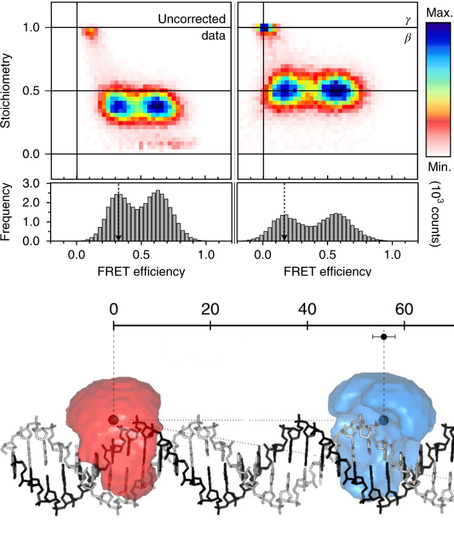
Figure 1 – Linking accurate FRET measurements to atomic resolution distances
Accurate FRET correction (top) and accessible volume modelling (bottom) are used to ensure calculated distances relate to the physical position of dyes on labelled biomolecules.
Images taken from Hellenkamp et al. 2018.