Single-molecule insight,
built for drug discovery
High-throughput smFRET, FCS and FCCS - from hit identification to candidate characterisation.
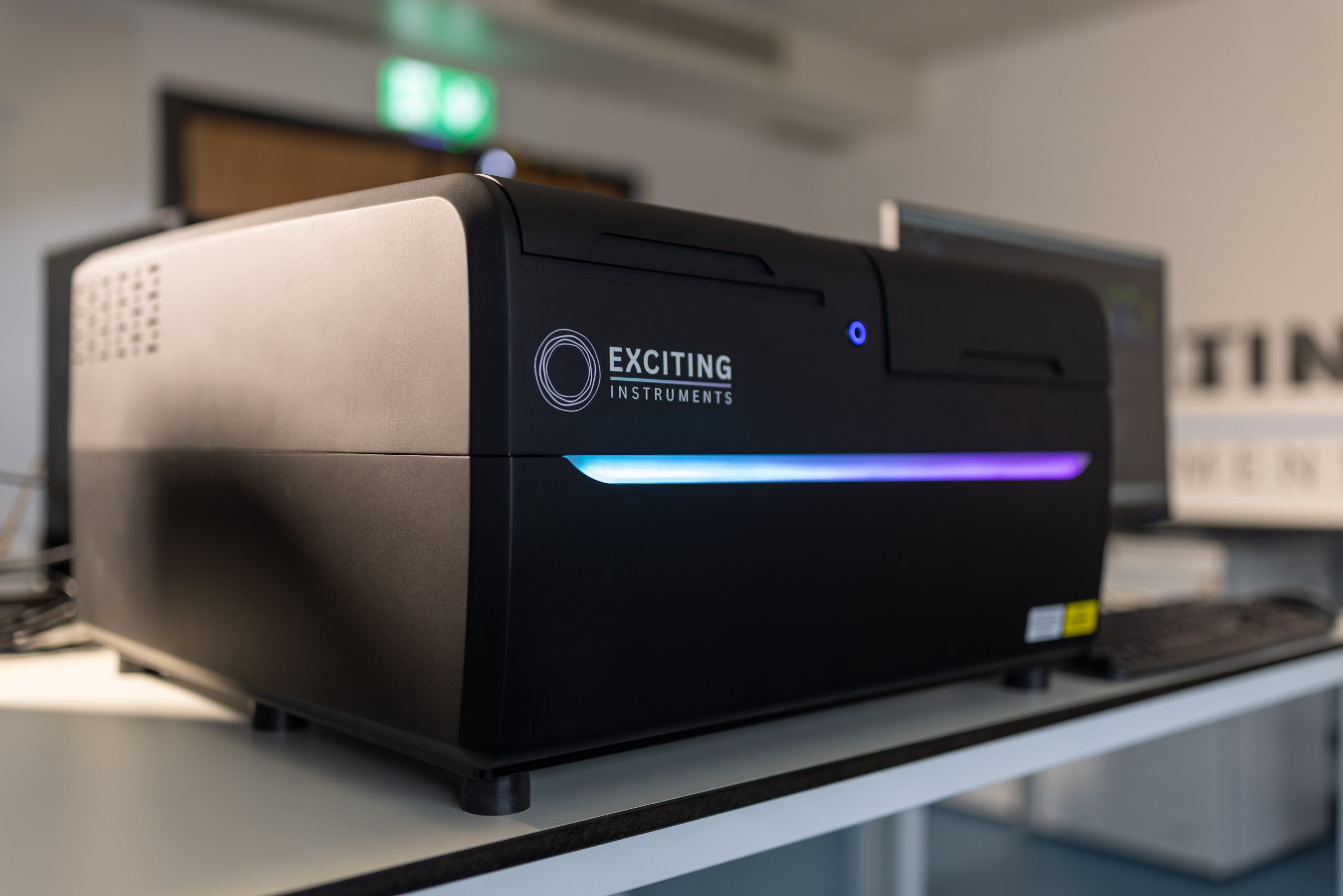
The EI-FLEX system brings single-molecule sensitivity into biopharma workflows. Screen binding variants, characterise ternary complexes, detect early aggregation, and profile conformational states - all in solution, at scale, and with minimal sample prep.
The problem
Your current assays are leaving critical insights on the table.
Surface-based and bulk ensemble methods are fast - but they miss what happens at the single-molecule level. In drug discovery, those hidden states are often the ones that matter most.
Are surface-based methods like SPR or BLI introducing artefacts and masking true binding behaviour?
Are bulk ensemble methods obscuring rare, weak, or early-stage interactions you can't afford to miss?
Are aggregation events or labelling heterogeneity going undetected until they cause late-stage failures?
Do you know how the binding of your candidate molecules changes the conformation of their targets?
The EI-FLEX system resolves these gaps - delivering single-molecule sensitivity with the throughput and simplicity biopharma workflows demand.
Built for your role
The right insight for every biopharma workflow
Select your focus area to see how the EI-FLEX system addresses your specific challenges.
Validate more binders, faster - including the weak ones.
Traditional workflows miss weak or early-stage binders and may introduce surface-based artefacts that cloud data. Single-molecule sensitivity and automated analysis yield clean affinities and kinetics directly from cell lysates or cell-free samples - with minimal assumptions.
Screen many variants in parallel
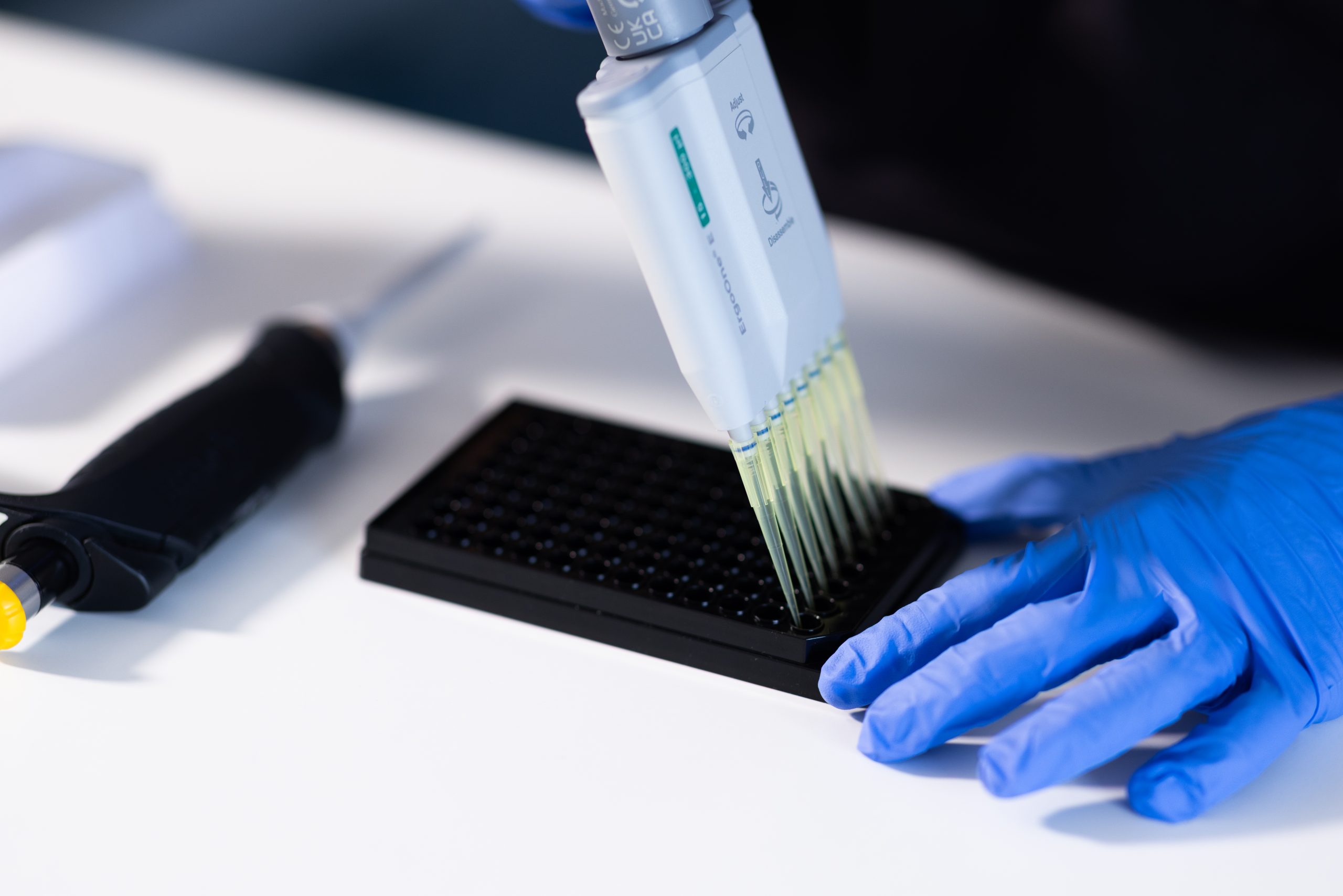
High-throughput, plate-based FCS enables fast characterisation of large binder panels straight from expression systems.
Detect weak or early-stage binders
Single-molecule sensitivity reveals transient, low-affinity, or rare binders earlier in discovery - before traditional methods can see them.
Measure binding in crude or cell-free samples
No immobilisation, purification, or complex prep. Clean affinities and curves with minimal assumptions about the sample.
Complements SPR, BLI and ITC
Use as an orthogonal in-solution format that validates and triages candidates before committing to downstream characterisation.
Detect and characterise ternary complexes with confidence.
Traditional methods can't sensitively detect ternary complexes or reliably distinguish binary vs. ternary species. F(C)CS delivers fast, clean dose-response curves and reduces false positives/negatives across PROTACs, molecular glues, and bispecific antibodies.
Simultaneous ternary complex detection
F(C)CS directly observes the formation of binary AB, BC, and ternary ABC complexes in one measurement - clean, unambiguous readout.
Generate hook plots rapidly
96/384-well plate format delivers full dose-response curves across PROTACs, glues, and bispecific development programmes at pM-nM concentrations.
Distance-independent detection
Diffusion-based FCCS avoids FRET distance limitations - detects small, weak, or transient ternary complexes regardless of orientation.
Automated population deconvolution
Cleanly separates unary, binary, and ternary species - reproducible dose-response curves ready for development-stage reporting.
Detect aggregation events before they cause failures.
Aggregation events that drive failure often begin long before they are detectable by traditional assays - now you can see them. Automated, high-throughput FCS delivers reliable mechanistic insights at scale while reducing noise, false negatives, and operator variability.
Detect rare and early aggregation events
Single-molecule sensitivity enables identification of early oligomeric species that DLS, SEC, AUC, and NTA consistently miss.
Measure directly in serum and complex biofluids
No complex sample prep required. Single-molecule detection overcomes scattering and viscosity challenges inherent to bulk methods.
Scale with full-integrated, high-throughput workflows
High-throughput plates reduce bottlenecks and operator variability across large condition sets.
Mechanistic, not just descriptive
See how environmental changes, such as excipients, pH, and salt concentration, change aggregation tendency.
Preserve native context. Reveal true conformational behaviour.
Membrane proteins are highly context-dependent - ensemble or surface-based assays often shift equilibria or produce artefacts. Single-molecule sensitivity and smFRET profiling capture transient or open/closed/mixed states in detergents, nanodiscs, or liposomes, without immobilisation.
Works in nanodiscs, detergents, and liposomes
In-solution smFRET + FCS operates in membrane-mimicking environments - no surface attachment, no disruption to native behaviour.
Resolve transient and intermediate conformations
Single-molecule detection captures rare, transient open/closed/mixed states missed by bulk tools across the protein's full dynamic range.
Combined structural and dynamic readout
smFRET provides structural transitions; FCS provides diffusion, trafficking, and clustering data for deep mechanistic understanding.
High-throughput ligand-binding profiling
96/384-well screening for conformational profiling and ligand-binding assays - without specialist expertise or bespoke setup.
Characterise and QC dye-conjugates - all on one platform.
Traditional methods require multiple techniques that don't directly report on fluorophore behaviour - and struggle with sensitivity, throughput, and heterogeneity detection. Our all-in-one approach resolves free dye from conjugated, detects aggregates, and reports on subtle conjugation differences directly in complex matrices.
Distinguish free dye from conjugated dye
No chromatography or purification needed. Picomolar sensitivity resolves subtle labelling heterogeneity and small conjugation-efficiency changes.
Directly determine brightness of fluorescent dyes
FCS quantifies the brightness of dyes in complex matrices, alongside the degree of labelling, so performance can be characterised in experimentally-relevant environments.
Automated QC at scale
Plate-based workflows quantify dye-to-conjugate ratios across many batches with minimal manual labour and high reproducibility.
Fast go/no-go decisions
Automated software delivers purity, stability, and conjugation metrics rapidly - accelerating release cycles and identifying batch failures early.
Turnkey single-molecule workflows. No custom assay development.
Current methods can't access hidden conformational states or deliver deeper mechanistic insight quickly. High-throughput smFRET/FCS + automated analysis delivers meaningful, interpretable results at scale - without bespoke optics, custom pipelines, or specialised expertise.
Off-the-shelf smFRET + FCS workflows
Rapid onboarding with minimal training. No custom setup, bespoke optics, or specialised assay development - ready to deliver results from day one.
Reveal hidden dynamic states
Single-molecule sensitivity captures intermediate states and conformational flexibility that bulk methods systematically miss.
Accelerate time-to-data
96/384-well screening plus automated interpretation tools produce meaningful, client-ready results.
Suitable for a range of biological questions
smFRET and FCS can be performed on a wide range of biomolecules, from nucleic acids and proteins, to nanoparticles and membranes.
Techniques
Three complementary techniques.
One benchtop instrument.
smFRET, FCS, and FCCS each address different questions - and together they provide a complete picture of molecular behaviour that no single bulk technique can match.
Conformational dynamics and nanoscale distances
FRET measures distances between fluorophores with Å resolution - resolving transient states and conformational changes that are invisible to structural or surface-based methods.
Diffusion, binding affinity and concentration
FCS analyses fluorescence fluctuations within a defined observation volume to reveal key biophysical parameters at single-molecule sensitivity - directly in complex matrices.
Ternary complex formation and stoichiometry
FCCS simultaneously monitors two labelled species and any interaction between them - without requiring a mass change, making it ideal for ternary complex characterisation.
How it works
Three steps from sample to insight
smFRET, FCS and FCCS experiments on the EI-FLEX system require low sample input and deliver rapid measurement times - with no specialist expertise needed.
Label and verify
Label targets with compatible dyes and verify that functionality is preserved. No need to purify from cell lysates or serum.
Acquire
Use PhotonFlux™ acquisition software to run smFRET, FCS, or FCCS experiments on the EI-FLEX benchtop instrument.
Analyse and publish
Use PhotonFit™ to perform data correction and generate publication-ready figures - or export HDF5 files for open-source analysis.
| smFRET | FCS / FCCS | |
|---|---|---|
| Sample volume | 10 µL-100 µL per sample; manufacturer-recommended volume for well plates | 10 µL-100 µL per sample; manufacturer-recommended volume for well plates |
| Concentration | Low pM to achieve single-molecule acquisition | Low pM up to 100 nM (lower concentration extends acquisition time) |
| Time per sample | ~30 minutes per sample | ~10 seconds per sample, ~16 min for 96-well, ~64 min for 384-well |
| Compatible dyes | Cy3/Cy5, Alexa Fluor 550/647, ATTO 550/647n (and more) | Any dye excited by available lasers; pair must have sufficient spectral separation for FCCS |
Proven in biopharma
Trusted by researchers across the biopharma value chain
"What sets the EI-FLEX system apart is its versatility - it's our go-to for probing kinetics and conformational changes that the other systems can't resolve. This opens up a range of research for us that was previously impossible."Professor Edwin Antony - Saint Louis University
Highly complementary
Expands your toolkit - doesn't replace it
The EI-FLEX system is designed to work alongside your existing infrastructure, filling the gaps that surface-based and bulk ensemble methods leave open.
SPR / BLI / ITC
Use FCS and smFRET in solution to orthogonally validate binding hits and kinetics from surface-based methods, removing immobilisation artefacts.
DLS / SEC / NTA / AUC
Where bulk aggregation tools miss early oligomeric species and perform poorly in serum, FCS resolves heterogeneous populations with single-molecule sensitivity.
ELISA
FCS and FCCS provide in-solution, single-molecule alternative or validation for binding data - reducing false positives and negatives common in ensemble-based plate assays.
UV-Vis / MS / HPLC / SEC
These methods don't directly report on fluorophore behaviour. FCS adds a direct fluorescence readout - measuring brightness, free-vs-conjugated dye, and stability in relevant matrices.
Cryo-EM / X-ray / NMR
Structural methods provide snapshots. smFRET and FCS fill the dynamic gap - revealing the transient states and solution behaviour that structures alone can't capture.
Cell-free / CFPS systems
Measure binding directly from crude cell-free expression products - no purification required. FCS works in lysates and other complex matrices with robust background rejection.
Get started
Bring single-molecule power
to your biopharma workflow
Find out how the EI-FLEX system fits into your pipeline - and which workflows would deliver the most immediate value for your team.