The FRET community has long required a universal standard that can be used as a positive control to decouple troubleshooting novel biology from the labelling process and instrument readout, while also bridging the gap between in vitro and in-cell measurements. Recently, Smith et al. addressed the lack of a universal standard to harmonise FRET data across instruments, platforms, and labelling methods by producing a protein ladder for FRET1. Notably, their method is suitable for in-cell labelling and direct analysis of mammalian cell lysates, as well as for purified proteins.
Key take-aways:
- A universal protein ladder for FRET analysis provides a stable, modular benchmark to harmonise FRET measurements and a predictable calibration curve
- The protein ladder is formed of CLIP and SNAP tags flanking increasing TPR repeats
- smFRET can be performed directly on mammalian cell lysates, using proteins that have been labelled using in-cell labelling via CLIP and SNAP tags, or site-directed mutagenesis and incorporation of non-canonical amino acids
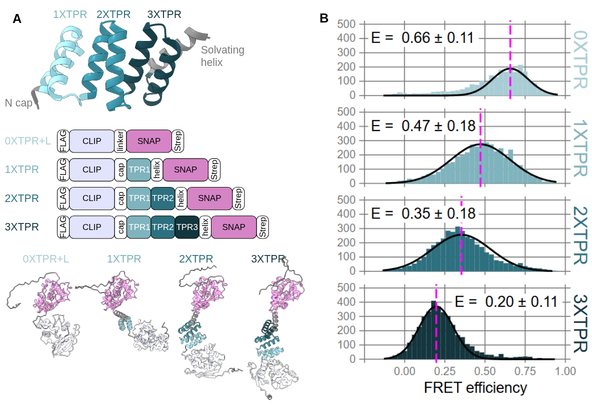
Figure 1 – A universal protein ladder for FRET
A) Schematic and protein structure of the protein ladder showing CLIP and SNAP tags flanking increasing TPR repeats
B) FRET efficiency histograms for ladder proteins with 0, 1, 2 or 3 TPR repeats; mean FRET efficiency ± standard deviation is indicated
Modified figure from publication by Smith et al.1